
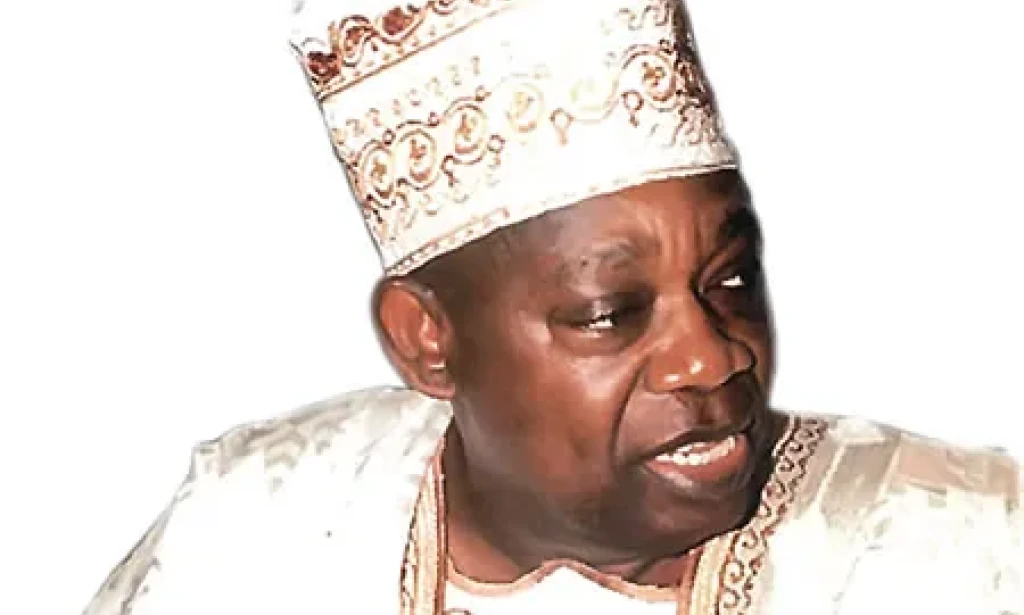
Majority of claimants to late presidential candidate's estate failed genetic verification
DNA testing has revealed that 66 out of 120 individuals who claimed to be children of the late Chief Moshood Kashimawo Olawale (MKO) Abiola failed to establish biological relationships with the deceased businessman and politician, according to his son Olalekan Abiola.
In an exclusive interview marking the 32nd anniversary of Nigeria's annulled June 12, 1993 presidential election, Olalekan disclosed that only 54 claimants successfully passed the genetic tests mandated by his father's will.
"About 120 people came forward claiming to be children of my father, but only 54 passed the DNA test. That means 66 failed," Olalekan stated at the family residence in Ikeja, Lagos.
The philanthropist's legacy attracts false claims
MKO Abiola, who died in detention on July 7, 1998, was known for his extraordinary generosity toward women in need. According to Olalekan, this philanthropy created opportunities for false inheritance claims after his death.
"They usually begged him for shelter, school fees and even with food. They used to come and line up in front of this house every month to collect their allowances," Olalekan explained. "My father would get some of them apartments or a house. Then they began to call themselves Mrs. Abiola, even though many of them were not."
The widespread practice of beneficiaries changing their children's surnames to Abiola prompted MKO to include a DNA testing requirement in his will, dated October 25, 1989. The tests were administered by Timothy Daniel, the UK-based executor of the estate, with results finalized in 2007.
Family disputes persist decades after patriarch's death
Beyond the inheritance claims, the Abiola family continues to grapple with internal leadership disputes. Olalekan criticized his elder brother Kola for failing to unite the family's legitimate children.
"Kola should be the leader of all the children, but he acts only as leader of his mother's children. He has not shown leadership in uniting all of us," Olalekan stated.
The family includes children from multiple marriages, including those of MKO's first wife Simbiat Abiola and his second wife Alhaja Kudirat Abiola, who was assassinated in 1996. Among the legitimate children are Hafsat, Al-hadi, Abdul Mumini, and Jamiu Abiodun.
Government debts remain unpaid after 27 years
Olalekan also revealed that various Nigerian government ministries still owe significant debts to his father's companies, dating back to contracts executed before MKO's death. Despite promises from successive administrations, these obligations remain unfulfilled.
"Obasanjo promised to pay. Jonathan said he would after winning a second term, but that never happened. Buhari gave us June 12 as Democracy Day, but never paid the debts," Olalekan recounted. He noted that current President Bola Tinubu, despite being a former associate of MKO, has not yet addressed the issue.
"They always promise to set up a committee to pay back the debts but none of them ever did," he added.
Questions about official recognition persist
Nearly three decades after his death, questions remain about MKO Abiola's official recognition as a democratically elected president. Olalekan questioned why his father's portrait is absent from Nigeria's presidential villa while those of military leaders who were never elected are displayed.
"If people like Abacha or Babangida, who were never elected, have their pictures in Aso Rock, why not MKO who Nigerians voted for in a free and fair election?" he asked.
The June 12, 1993 election, widely considered Nigeria's freest and fairest, was annulled by then-military ruler General Ibrahim Babangida. MKO Abiola, the presumed winner, was later detained after declaring himself president and died in custody under disputed circumstances.
A legacy of trauma and remembrance
For the Abiola family, the past 27 years have been marked by continuing trauma, particularly following Kudirat Abiola's assassination in 1996. "Honestly, it's been 27 years of trauma, especially with my mother's assassination," Olalekan reflected.
Despite the passage of time, MKO Abiola's legacy continues to resonate with Nigerians. "He's been dead for 27 years, yet Nigerians are still bringing his memory back to life as if he died two weeks ago," Olalekan observed.
As Nigeria commemorates another anniversary of the June 12 election, now recognized as Democracy Day, the Abiola family continues to seek both financial restitution and proper recognition for their patriarch's role in Nigeria's democratic struggle.
"What my father stood for must be upheld. Let his legacy be implemented according to Nigerian law. That's the least the government can do," Olalekan concluded.

You must be logged in to post a comment.