
I. Introduction: Nigeria on the Brink – A Nation Undone by Its Custodians
Nigeria stands at a perilous juncture, teetering on the precipice of systemic failure. This dire state is not the consequence of abstract forces or unavoidable misfortune but the direct outcome of deliberate actions and culpable inactions by those entrusted with the nation's leadership and the integrity of its institutions. The convergence of rampant, deeply entrenched corruption, a judiciary widely perceived as compromised, and an electoral system that inspires little public confidence has propelled the nation towards a condition that can only be described as a near-collapse. This is not merely a period of transient challenges; it is a fundamental crisis of governance, eroding public trust and jeopardizing the very fabric of Nigerian society.
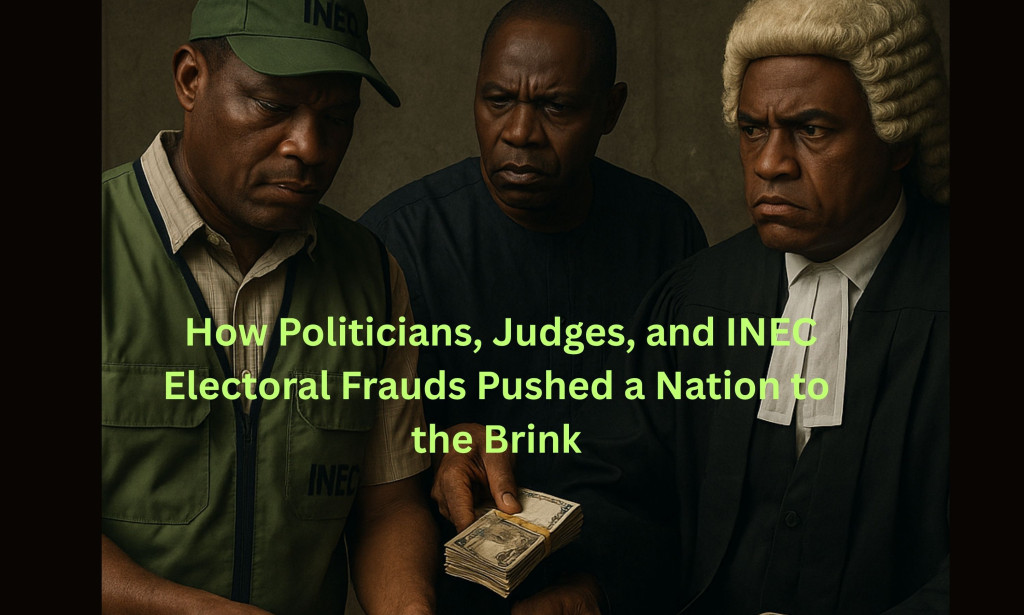
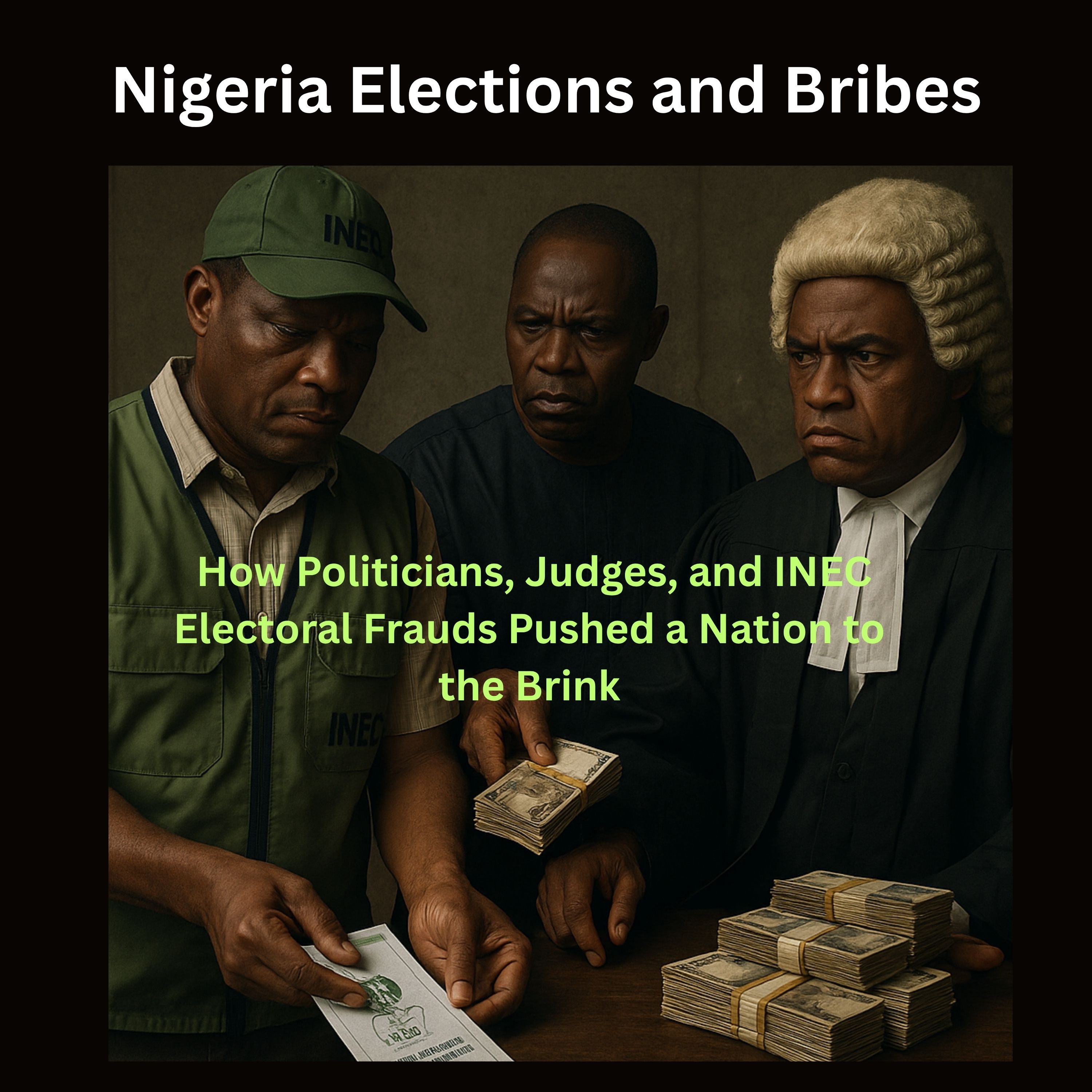
The architects of this decline are identifiable and bear primary responsibility for the nation's descent. The political elite, whose stewardship has been characterized more by self-enrichment than public service; the judiciary, which has frequently failed in its duty to dispense impartial justice and uphold the rule of law; and the Independent National Electoral Commission (INEC), the body charged with safeguarding democratic processes but often accused of subverting them, are the principal entities accountable for this unfolding catastrophe. Their collective and individual failings have fostered a symbiotic system of decay, where the misconduct of one institution enables and exacerbates the failures of the others. Politicians engage in breathtaking acts of corruption, secure in the knowledge that a compromised judiciary is unlikely to hold them accountable and may even validate questionable electoral victories. INEC, in turn, is accused of facilitating or failing to prevent the manipulation of the democratic process, completing a vicious cycle that perpetuates misrule and public despair.
This situation points to a disturbing normalization of systemic dysfunction. The persistent issues of corruption, questionable judicial pronouncements, and flawed elections are not isolated incidents but have become so deeply ingrained in the Nigerian political landscape that they almost represent a new, corrosive 'normal'. This pattern is evident from the admission by a former president regarding the flawed elections of 2007 to the ongoing controversies surrounding the 2019 and 2023 electoral cycles, suggesting a chronic ailment rather than acute episodes. When such patterns persist despite public outcry and supposed reform efforts, it signals a systemic entrenchment where the very mechanisms designed to check abuses are themselves compromised. The declining public confidence in governmental institutions is a direct public response to this grim reality. This normalization of dysfunction is a critical marker of state decay, as it signifies a loss of the inherent corrective mechanisms vital for a healthy polity.
Furthermore, the failures of these key institutions are not merely additive in their impact; they are interdependent, creating an amplification of crisis. The malfeasance of one entity directly enables and intensifies the shortcomings of the others, forging a downward spiral that accelerates the nation's decline. For instance, when politicians engage in grand corruption and the judiciary fails to prosecute them or delivers judgments that are perceived as biased, a climate of impunity is established. This impunity emboldens further political interference in electoral bodies like INEC or encourages more audacious electoral malpractice. If INEC, then, is unable to prevent or is complicit in rigged elections, and the judiciary subsequently validates these flawed outcomes, the cycle of decay is reinforced. This interconnectedness means that addressing the problem in one sphere is rendered futile if the others remain deeply compromised. The failure is thus multiplicative in its destructive power, hastening Nigeria's journey towards a comprehensive collapse.
II. The Political Quagmire: Corruption as Statecraft
The affliction of corruption has metastasized throughout the Nigerian body politic, transforming from an occasional malady into a fundamental operational principle for a significant segment of the political class. Political office, in too many instances, is pursued not as a conduit for public service but as an avenue for illicit enrichment and the consolidation of power. Transparency International's consistently dismal rankings for Nigeria bear grim testimony to this long-standing and deeply embedded pathology. The sheer scale of bribery, with an estimated 87 million bribes reportedly paid in a single year like 2023, underscores a systemic rot that extends far beyond isolated incidents of malfeasance, indicating that such practices have become a pervasive feature of interactions with public officials. This environment of normalized corruption suggests that the cost of living, insecurity, and unemployment are not the only critical problems plaguing Nigerians; corruption itself ranks highly among their chief concerns.
The consequences of this endemic corruption are devastating, crippling economic development and fueling widespread insecurity. Vast sums of public money, siphoned through a myriad of corrupt practices, are diverted from critical sectors such as healthcare, education, and infrastructure development. This diversion directly translates into a diminished quality of life for ordinary Nigerians, inadequate social services, and stunted national progress. An auditor-general's report in 2020, for example, uncovered nearly $117 million in government contract fraud and procurement violations, a figure that likely represents only a fraction of the true scale of plunder. Further reports indicate the national treasury has been defrauded of many more millions through contract award irregularities, payments for non-executed contracts, and due process violations.
Moreover, corruption is inextricably linked to the escalating insecurity that grips the nation. Misappropriated funds intended for defense and security often weaken the capacity of the armed forces and law enforcement agencies to effectively combat threats. Simultaneously, the economic despair and lack of opportunity exacerbated by corruption can serve as powerful recruitment tools for criminal enterprises, bandit groups, and insurgent movements, as individuals, seeing no legitimate path to sustenance, are driven towards illicit activities. The misallocation of funds, with local governments in some regions reportedly diverting up to 30% of their budgets to security, further strips resources from essential development projects, perpetuating a cycle of underdevelopment and insecurity.
Notable examples of high-level graft and the pervasive impunity that shields perpetrators abound, illustrating the audacity and systemic nature of the problem. The suspension of a serving minister, Betta Edu, over allegations of diverting N585 million from the Ministry of Humanitarian Affairs, without subsequent dismissal or formal charges as of early 2025, epitomizes the glaring lack of accountability for the politically connected. This case is compounded by the investigation of her predecessor, Sadiya Umar-Farooq, concerning alleged corruption involving N37 billion in social intervention funds. The Economic and Financial Crimes Commission (EFCC) reportedly tracing 753 properties in the Federal Capital Territory to a single, unnamed top government official—an anonymity that itself has been described as a "charade"—further highlights the often-performative nature of anti-corruption efforts when powerful interests are involved. Historical precedents, such as the $80 million embezzlement case against former state governor James Ibori and the Glencore bribery scheme where over $52 million were paid to intermediaries in Nigeria, demonstrate that these are not new phenomena but rather enduring patterns of political clientelism and impunity. This environment allows many corrupt officials to evade justice, often through mechanisms like plea bargains or by exploiting weaknesses within a compromised judicial system.
The sheer scale and visibility of this political corruption, coupled with the near-total impunity for its perpetrators, have profoundly eroded the legitimacy of the Nigerian state in the eyes of its citizens. This is not merely an issue of stolen financial resources; it represents a fundamental breach of the social contract. When citizens witness astronomical sums being looted by public officials while they themselves endure severe economic hardship, including soaring inflation and widespread unemployment, and observe a consistent failure to hold the powerful accountable, the perception solidifies that the state primarily serves the predatory interests of a select elite rather than the public good. The documented decline in public confidence regarding the government's anti-corruption efforts is a direct reflection of this de-legitimization. When the state is no longer viewed as a credible guardian of public resources or an impartial arbiter of justice, its authority inevitably wanes, contributing to an environment of lawlessness and societal fragmentation—key indicators of a system approaching collapse.
Furthermore, political corruption in Nigeria is not simply a passive byproduct of holding office; it has evolved into an active, necessary instrument for acquiring and retaining political power. Illicitly acquired wealth is frequently reinvested into the political machinery, funding the rigging of elections, maintaining extensive patronage networks, and securing loyalty, thereby ensuring the corrupt system perpetuates itself. Elections are often characterized by rampant vote buying and the politics of patronage, where access to substantial financial resources—often derived from corrupt dealings—provides a decisive advantage. In this context, engaging in corruption can be seen by some political actors as a strategic "investment" to finance future electoral campaigns or to buy the silence or complicity of key individuals and institutions. The consistent failure of the judiciary to convict high-profile corrupt figures and the alleged complicity of INEC in facilitating flawed elections significantly reduce the perceived risks associated with this "investment." This creates a closed, self-reinforcing loop: corruption funds the acquisition of political power, and that political power, in turn, protects and enables further corruption. This vicious cycle makes genuine reform incredibly difficult, leading to progressive institutional decay and entrenching a kleptocratic order.
III. Justice for Sale: The Judiciary's Role in Democratic Decay
The Nigerian judiciary, constitutionally envisioned as the bastion of justice, the impartial arbiter of disputes, and a crucial check on executive and legislative excesses, stands accused of severe ethical bankruptcy and pervasive corruption. There is a widespread and damaging perception that the judiciary is "no better" than other sectors plagued by graft. Allegations abound that bribes and strategically negotiated plea bargains frequently allow corrupt, politically exposed persons to evade meaningful justice, thereby flaunting their ill-gotten wealth and undermining the very essence of the rule of law. The reported dismissal of corruption cases against influential politicians under dubious circumstances, such as a judge being specially "drafted in from vacation" to handle a case, serves as a stark illustration of the alleged manipulation and politicization that subvert judicial integrity.
A particularly egregious aspect of the judiciary's failings lies in its controversial role in the adjudication of electoral disputes. The courts have become the final arbiters of electoral outcomes, yet their decisions often fuel further controversy and deepen public cynicism. An analysis of the 2023 election petitions reveals an alarmingly high failure rate for those challenging declared results—approximately 88.9% at the Election Petition Tribunal level and 79.4% at the Court of Appeal, according to one study. While some dismissals are attributed to petitioners' failure to discharge the extraordinarily high burden of proof or to procedural errors, the consistency of these outcomes raises profound questions about genuine access to electoral justice and the judiciary's willingness to substantively address allegations of electoral fraud. There are numerous instances where judicial decisions are perceived by significant segments of the population to have validated rigged or highly contentious elections, thereby effectively circumventing the democratic will of the electorate. The recent Edo State election tribunal judgment, which affirmed the declared winner despite strong allegations of irregularities, and the subsequent accusation by the Peoples Democratic Party (PDP) that the tribunal effectively became a "fourth respondent" in the case by allegedly siding against their petition, serves as a potent contemporary example of this crisis of confidence. This is not without historical precedent; the judiciary's role in annulling democratic elections, most infamously the 1993 presidential vote, provides a disturbing context for current concerns about its capacity to safeguard democratic processes.
Beyond electoral matters, the judiciary has, at times, appeared complicit in enabling political repression and shielding executive overreach. The protracted persecution of activist and journalist Omoyele Sowore stands as a glaring case in point. Despite multiple court orders mandating his release, security agencies acted with brazen impunity, even storming a courtroom to re-arrest him—an act described as a "blatant attack on the rule of law". Sowore's bail conditions, labeled "punitive and petulant," further highlighted a judicial willingness to endorse, or at least not effectively counter, executive high-handedness. This pattern extends to the judiciary’s apparent reluctance to robustly challenge the brutality of security agencies during protests, such as those in 2024, and its failure to prevent the use of legal intimidation tactics, including the levying of treason charges against peaceful protesters—a chilling echo of the strategies employed against Sowore.
These multifaceted failures—encompassing corruption, questionable validation of electoral results, and complicity in repression—have inevitably led to a catastrophic erosion of public trust in the judiciary and the broader justice system. When courts are widely perceived as instruments of the powerful, susceptible to bribery, or unwilling to dispense impartial justice, citizens lose faith in the legal system as a viable means of redress or accountability. This loss of trust is not merely an abstract concern; it has tangible consequences, potentially leading individuals and communities to seek alternative, sometimes extra-legal, means of resolving disputes or expressing grievances, thereby contributing to further instability and a breakdown of social order. The Rivers State political crisis, for example, showcases the immense pressure and scrutiny placed upon the judiciary to resolve deeply politicized conflicts, where any judgment is likely to be viewed through a partisan lens.
The increasing phenomenon of the "judicialization of politics," where courts are routinely called upon to resolve fundamentally political and electoral disputes, is less a testament to a robust and trusted legal system and more a symptom of profound democratic failure. When electoral institutions like INEC conduct elections that are widely discredited due to allegations of rigging and systemic malpractices, political actors, having lost faith in the fairness of the electoral process itself, invariably turn to the courts in large numbers, as evidenced by the sheer volume of petitions following the 2023 elections. The judiciary is then thrust into the unenviable position of determining political outcomes, effectively "electing" leaders through courtroom battles rather than through the ballot box. This not only places immense strain on judicial resources but also exposes the judiciary to intensified allegations of bias and corruption, especially if its decisions appear to consistently favor the incumbent or the politically powerful. This trend signifies a critical democratic deficit: if the electoral process itself were credible and commanded public trust, the necessity for such extensive and contentious judicial intervention would be drastically reduced.
Moreover, by failing to consistently uphold the rule of law against powerful political actors, by validating electoral outcomes that are widely viewed as illegitimate, and by not robustly protecting citizens' fundamental rights against state overreach, the judiciary risks becoming an enabler of authoritarian creep. This can occur even within a nominally democratic framework. When executive agencies disregard court orders with impunity, as seen in the Sowore case, or engage in the violent repression of dissent, as witnessed during the 2024 protests, and the judiciary fails to impose significant consequences or appears to legitimize such actions through its rulings, it sends a dangerous signal that such behavior is permissible. Similarly, if election results widely believed to be the product of manipulation are consistently upheld by the courts, it fatally undermines the power of the vote and strengthens the hand of those who subvert democratic norms. This progressive erosion of democratic checks and balances leads to a concentration of power, a reduction in accountability, and a hollowing out of democratic institutions. Over time, this pattern of judicial acquiescence or, worse, complicity, can lead to a system where democratic pretenses mask an increasingly authoritarian reality, contributing directly to the "collapse" of meaningful democratic governance.
IV. INEC: Guardian or Underminer of the Ballot?
The Independent National Electoral Commission (INEC), the institution constitutionally mandated to organize, undertake, and supervise all elections to major political offices in Nigeria, faces a profound crisis of credibility. Instead of being revered as an impartial umpire ensuring the sanctity of the ballot, INEC is frequently and vehemently accused of partisanship and, in some instances, of actively facilitating the rigging of elections in favor of specific politicians or political parties. Reports indicate that INEC's underperformance is often compounded by prevailing insecurity and the perceived ineffectiveness or complicity of security agencies deployed during elections. This creates an environment ripe for manipulation, where the electoral process becomes vulnerable to undue influence and subversion.
Security agencies themselves are often alleged to be tools in the hands of politicians, deployed to create an atmosphere of fear, intimidate opposition voters, and even supervise or participate in electoral fraud, with INEC appearing either unwilling or unable to prevent such abuses. The deep-seated distrust is encapsulated in assertions that INEC should be "held responsible" for electoral malfeasance, such as that alleged in Edo State, precisely because "electoral offenders are not held accountable" in the country, fostering a climate of impunity. While a specific rumor concerning the arrest of the INEC chairman was debunked, the very existence and circulation of such a rumor, explicitly linked to the controversial 2023 presidential election, underscores the pervasive public suspicion surrounding the commission and its leadership.
Operational deficiencies and a perceived lack of genuine independence further plague INEC. Persistent issues such as the late arrival of electoral officials and materials at polling centers, unexplained alterations and falsifications of election results, and brazen attacks on election observers and their equipment continue to mar electoral exercises. Although the INEC Chairman, Mahmood Yakubu, has pointed to logistical improvements in the run-up to the 2023 general elections, attributing these to timely amendments in the Electoral Act, the barrage of criticisms and documented irregularities during and after those elections suggests that such improvements were either insufficient, unevenly applied, or overshadowed by more systemic failings. A core cause of INEC's perceived lack of effectiveness and impartiality is the persistent issue of political interference in its operations, including appointments to the commission. This interference undermines its autonomy and ability to act without fear or favor. Adding to these concerns is INEC's often controversial conduct during the subsequent election petition processes. The commission has faced accusations of delaying the provision of court-ordered electoral documents crucial for petitioners to build their cases, and has, at times, adopted an adversarial stance against petitioners, defending its declared results with a vigor that some argue is inappropriate for an impartial electoral body.
The controversy surrounding the electronic transmission of results and the functionality of the INEC Result Viewing (IReV) portal during the 2023 elections dealt a particularly severe blow to the commission's credibility. Despite pre-election assurances from INEC regarding the robust use of technology to enhance transparency, the courts, when adjudicating petitions, largely upheld INEC's subsequent argument that the manual collation of results remained the primary and legally binding method, and that electronic transmission to the IReV portal was not mandatory for the purpose of collation but merely for public viewing. This significant discrepancy between public expectations (fueled by INEC's own pronouncements) and the eventual legal interpretations and actual practices during the collation process created widespread disillusionment and severely damaged trust in both INEC and the electoral technology deployed.
Furthermore, INEC's failure to ensure adequate electoral security remains a critical challenge. The pervasive insecurity that characterizes many parts of Nigeria, manifesting as election-related violence, thuggery, intimidation, and direct attacks on INEC facilities, personnel, and materials, fundamentally compromises the integrity of the entire electoral process. INEC's necessary reliance on state security agencies, which are themselves frequently accused of partisanship, unprofessional conduct, or outright complicity in electoral malpractice, creates an inherent paradox. The very entities meant to secure the election are sometimes perceived as threats to its fairness, leaving INEC in a vulnerable and often compromised position.
This profound credibility gap surrounding INEC acts as a potent catalyst for political instability. When the primary institution responsible for managing democratic succession and conferring legitimacy upon elected officials is widely perceived as compromised, partisan, and untrustworthy, it inevitably delegitimizes electoral outcomes in the eyes of a significant portion of the populace and the political opposition. This typically leads to protracted and acrimonious legal battles, as seen with the numerous petitions following the 2023 elections and the Edo State contest. It can also fuel public protests and civil unrest, as aggrieved parties feel that the official channels for fair political competition are irredeemably blocked. The resultant atmosphere of pervasive political instability and uncertainty is detrimental to governance, economic development, and social cohesion. This widespread loss of faith in INEC's capacity to conduct free and fair elections contributes significantly to voter apathy, as citizens become convinced that their votes do not matter or that outcomes are predetermined. Such disengagement is corrosive to democracy.
Moreover, there exists a paradox concerning electoral reforms in Nigeria. Despite periodic legislative changes, such as the Electoral Act 2022, and the introduction of new technologies like the Bimodal Voter Accreditation System (BVAS) and the IReV portal, aimed at enhancing electoral integrity, the persistence of widespread malpractice suggests a deeper malaise. Legal and technological reforms alone appear insufficient in the absence of genuine political will from the ruling elite to allow for truly free and fair contests, robust institutional independence for both INEC and the judiciary, and a fundamental shift in the political culture that currently condones or even encourages manipulation. Indeed, these reforms can sometimes create new avenues for dispute and contention if they are not implemented transparently, if their application is selective, or if they are poorly understood by stakeholders and the judiciary. The controversies surrounding the IReV portal's usage and the difficulties encountered with BVAS machine demonstrations in court, as noted in the Edo State election tribunal, exemplify this challenge. Consequently, a situation arises where reforms exist on paper, and new technologies are deployed, yet the age-old problems of rigging, voter intimidation, and systematic disenfranchisement persist, sometimes merely adapting to the new landscape. The consistent failure of these reforms to deliver tangible and widely accepted improvements in electoral fairness only serves to deepen public cynicism and reinforce the perception of systemic breakdown, as even concerted attempts to mend the system appear to falter against the entrenched forces of manipulation.
V. The People's Will Thwarted: A Pattern of Electoral Subversion
The subversion of the people's will in Nigeria is not a random occurrence but a patterned and often systematic process, executed through a repertoire of tactics designed to manipulate electoral outcomes. Beyond the institutional failings of INEC and the judiciary, on-the-ground malpractices are rampant, effectively disenfranchising voters and undermining democratic legitimacy. Common methods include blatant vote buying, where citizens, often impoverished, are induced with cash or goods; ballot box snatching and stuffing, particularly in areas with weak security presence; and targeted voter intimidation and suppression, frequently aimed at opposition strongholds or specific ethnic demographics to reduce their turnout. Violence, orchestrated by political thugs and sometimes, allegedly, with the acquiescence or active involvement of compromised security agents, is used to disrupt voting, scare away electors, and create chaos. Furthermore, the manipulation of voter registration lists and the accreditation process at polling units serves as another avenue to disenfranchise legitimate voters or enable illegitimate ones. The ominous presence of "unknown gunmen" and other violent non-state actors in various regions further exacerbates the climate of fear, making free and fair participation in elections a hazardous undertaking for many.
Spotlight: The Edo State Election Imbroglio – A Case Study in Systemic Failure
The recent Edo State governorship election and its aftermath serve as a stark and compelling case study, a microcosm reflecting the broader national malaise that plagues Nigeria's electoral system. The Independent National Electoral Commission declared Monday Okpebholo of the All Progressives Congress (APC) the winner of the election held in late 2024, with Asue Ighodalo of the Peoples Democratic Party (PDP) as the runner-up. This declaration was immediately and vehemently rejected by the PDP, which alleged that the election was characterized by widespread irregularities, extensive malpractice, and the illegal inflation of votes in favor of the APC. One PDP representative specifically contended that significant fraud occurred at the collation centers through the inputting of erroneous figures. The PDP's petition detailed claims of substantial non-compliance with the Electoral Act by INEC during the conduct of the election.
The role of both INEC and the judiciary in the ensuing dispute came under intense scrutiny. INEC, for its part, defended the declared results. However, critics and opponents, including figures from the TAP Initiative, argued that INEC should be held directly responsible for what they termed "criminality" in the Edo State election, citing a general lack of accountability for electoral offenders in Nigeria as a contributing factor to recurrent malpractices.
The Election Petition Tribunal, after conducting its proceedings, delivered its judgment in April 2025. It affirmed Okpebholo's victory and dismissed the PDP's petition, declaring it "lacking in merit". The tribunal cited several key reasons for this dismissal. Firstly, it held that the PDP had failed to establish its allegations or meet the requisite burden of proof to overturn the election results. Secondly, it deemed the witnesses presented by the PDP as incompetent, stating their testimonies amounted to hearsay as they were not direct participants (like voters, accredited polling unit agents, or presiding officers) in the specific polling units where irregularities were alleged. Thirdly, issues arose with the demonstration of over-voting using the Bimodal Voter Accreditation System (BVAS) machines in court; the machines brought by a subpoenaed witness were reportedly not switched on, preventing a live demonstration. The tribunal emphasized that proving over-voting required the voters' register, the BVAS machine itself (or its certified record), and Form EC8A for each contested unit. Finally, the tribunal concluded that the PDP had failed to prove INEC's non-compliance with the Electoral Act.
The PDP's reaction to the tribunal's judgment was one of profound disappointment and strong condemnation. The party leadership described the outcome as a "huge travesty of justice" and controversially accused the tribunal justices of effectively making themselves the "fourth respondent" in the case—a serious allegation implying that the tribunal actively worked against their petition rather than serving as a neutral arbiter of the facts and law. The PDP immediately announced its intention to appeal the decision, vowing to take the matter up to the Supreme Court if necessary, to ensure that what they termed "the will of Edo people" was upheld. In the interim, the opposition pledged to act as a robust check on the declared winner's administration.
The Edo State election imbroglio is far from an isolated incident; rather, it is deeply reflective of the systemic issues that perennially undermine Nigeria's electoral landscape. The familiar pattern of hotly contested results, serious allegations of rigging and manipulation directed at INEC, and a judicial process that is viewed with intense suspicion and often accused of bias by the losing side, culminates in a pervasive feeling among many citizens that the true will of the electorate has been subverted. The significant challenges faced by petitioners in proving electoral malpractice in court, as starkly highlighted by the Edo tribunal's reasoning—particularly concerning the burden of proof, the competency of witnesses, and the technicalities of demonstrating irregularities with electoral technology like BVAS—are common hurdles encountered by those challenging election results across the nation.
This leads to a situation where electoral impunity can be, in effect, "legalized" through the imposition of extremely high and often technically complex evidentiary burdens by electoral tribunals. If electoral rigging is sophisticated, or if INEC and security agencies actively or passively obstruct the gathering of crucial evidence, perpetrators of electoral fraud can escape accountability through the courts. This is not necessarily because fraud did not occur, but because it could not be proven to the stringent satisfaction of the judiciary within the constrained timelines of election petitions. For example, the requirement to prove irregularities "polling unit by polling unit," often demanding the physical presentation of BVAS machines or their certified records for every single contested unit, and the calling of eyewitnesses from each, presents a monumental, if not insurmountable, task for most petitioners. This legal framework, ostensibly designed to ensure justice, can inadvertently shield electoral misconduct because the bar for proving it is set so prohibitively high or is so technically convoluted. The predictable outcome is a culture of impunity for those who rig elections, as they become confident that any subsequent legal challenge is likely to fail on technical grounds, irrespective of the substantive merits of the allegations.
The devastating impact of this recurring cycle on voter morale and democratic participation cannot be overstated. When elections are consistently marred by credible allegations of rigging, and when legal challenges are widely perceived as futile exercises or, worse, as extensions of a biased system—as articulated in the PDP's damning assessment of the Edo tribunal—it inevitably leads to profound voter disillusionment and apathy. If citizens come to believe that their vote does not genuinely count or that electoral outcomes are predetermined by powerful interests regardless of their participation, their incentive to engage in the democratic process plummets. This is reflected in declining voter turnout figures observed in various elections. Such a decline in meaningful democratic participation inherently weakens democracy itself, making it easier for unaccountable and illegitimate elites to capture and maintain power, thereby accelerating the "collapse" of genuine democratic practice and entrenching a system where the voice of the people is muted and their will is routinely thwarted.
VI. The Tangible Costs of a Failing State
The cumulative effect of pervasive political corruption, a compromised judiciary, and a subverted electoral system is not confined to the abstract realm of governance; it inflicts tangible, devastating costs upon the Nigerian populace, manifesting in severe economic hardship, rampant insecurity, a deepening humanitarian catastrophe, and a corrosive erosion of social cohesion. These are the direct consequences of a state failing in its most fundamental responsibilities.
Economic Hardship and Soaring Inflation:
The failures of governance are inextricably linked to the severe economic crisis confronting ordinary Nigerians. Economic reforms, such as the removal of fuel subsidies in 2023, while potentially necessary in principle, were implemented within a climate of profound public distrust and pre-existing hardship. This, coupled with other longstanding structural inefficiencies, contributed to a surge in inflation, which reached an alarming 34.19 percent by June 2024, with food inflation soaring past 40 percent, pushing millions deeper into poverty and desperation. The Nigerian economy experienced a significant contraction in business activity, as evidenced by the CBN Purchasing Managers Index (PMI) remaining in contraction territory (below 50) for an extended period, signaling a decline in overall economic health. This precarious economic environment has led to the divestment of several multinational corporations, citing uncertainties and operational challenges, while nano, micro, small, and medium-sized enterprises (NMSMEs)—the very backbone of Nigeria's economy—have been particularly hard-hit, with many forced to shut down due to their limited capacity to absorb economic shocks. Compounding these woes are limited access to affordable credit for businesses and grossly inadequate infrastructure, especially in power, transportation, and digital connectivity, which further undermines productivity and competitiveness.
Rampant Insecurity: A Nation Under Siege:
Nigeria is besieged by multifaceted security crises across virtually all its regions, transforming vast swathes of the country into landscapes of fear and violence.
In the Northwest and Northcentral regions, so-called bandit gangs continue their reign of terror, engaging in mass killings, widespread kidnappings for ransom, and violent raids on communities. The scale of these abductions is horrifying, exemplified by the kidnapping of nearly 400 individuals, including 287 schoolchildren, in Kaduna State in March 2024 alone, and at least 15 students from a boarding school in Sokoto State during the same period. Persistent and bloody conflicts between herders and farming communities also plague these regions, leading to significant loss of life, such as the Christmas Day assault in Plateau State in December 2023 that claimed about 140 lives, and subsequent reprisal attacks that killed at least 30 more in Mangu Local Government Area in January 2024. By April 2024, these conflicts had resulted in over 1.3 million internally displaced persons (IDPs) in the Northcentral and Northwest regions alone.
The Southeast region is grappling with separatist agitations, primarily associated with the Indigenous People of Biafra (IPOB), and the menacing activities of "unknown gunmen" who perpetrate attacks on civilians, security forces, and public infrastructure. Clergy members have been abducted and murdered, and violently enforced "sit-at-home" orders have crippled economic activities and instilled a climate of fear.
This pervasive insecurity is not divorced from governance failures. Endemic corruption diverts funds meant for equipping and motivating security forces, while some political actors are accused of covertly fueling conflicts for political gain. The overall breakdown of law and order signals a state struggling to fulfill its primary duty of protecting its citizens.
Humanitarian Catastrophe and Human Rights Abuses:
The confluence of conflict, criminality, and governance failure has precipitated a severe and escalating humanitarian crisis, particularly concentrated in the North East, North Central, and North West regions. Millions of Nigerians are affected, with extensive displacement being a defining feature. Over 2.3 million IDPs were recorded in the North East, and over 1.3 million in the North Central and North West by mid-2024. These figures do not capture the full extent of suffering, which includes widespread human rights abuses such as extrajudicial killings, abductions, rape, torture, and a disturbing surge in gender-based violence. These atrocities are often perpetrated by non-state armed groups operating with impunity, and are exacerbated by the conditions of conflict and displacement. The impact of climate change, manifesting in recurrent flooding and droughts, further compounds the vulnerability of affected populations, driving displacement and destroying livelihoods. Beyond the conflict zones, the state's response to dissent has also raised serious human rights concerns, with reports of arrests and prosecution of journalists, social media commentators, and peaceful protesters. The violent crackdowns on protests, such as those in 2024 against economic hardship, which reportedly led to fatalities including children, further underscore a disregard for fundamental human rights.
Widespread Despair and Erosion of Social Cohesion:
The unrelenting barrage of these converging crises—economic collapse, pervasive insecurity, and humanitarian suffering—has exacted a heavy psychological toll on the Nigerian populace. A pervasive sense of hopelessness, fear, and despair has become commonplace. This is compounded by an erosion of trust, not only in formal institutions of governance but also between different communities. Ethnic and religious tensions, often manipulated for political purposes, along with fierce competition over dwindling resources, have frayed the bonds of social cohesion. The state's inability to provide basic security or ensure justice has led some communities to resort to self-help, including the formation of vigilante groups, which, while sometimes necessary for immediate protection, can also contribute to the fragmentation of state authority and further cycles of violence.
The following table offers a consolidated view of these manifestations of systemic crisis:
Table 1: Manifestations of Systemic Crisis in Nigeria
| Sphere of Crisis | Key Destabilizing Factors/Symptoms (Narrative Summary) |
| Economic Stability | Crippling hyperinflation drastically reducing purchasing power; severe currency devaluation; widespread and deepening poverty; extensive business closures, particularly among MSMEs; significant multinational divestment; decaying public infrastructure; the profoundly negative impact of abrupt fuel subsidy removal without adequate social safety nets. |
| National Security | Proliferation and brazen operation of armed non-state actors including bandits, insurgents, and "unknown gunmen"; routine mass kidnappings for ransom, including schoolchildren; escalating and deadly farmer-herder violence over land and resources; resurgent separatist conflicts and agitations; overstretched, under-resourced, and often compromised state security forces. |
| Social Cohesion | Intensification of ethnic and religious fault lines, often exploited by political actors; massive internal displacement leading to strained host community resources and inter-communal tensions; profound erosion of trust between citizens and the state, and amongst different societal groups; frequent mass protests against governance failures, often met with violent state repression; pervasive atmosphere of fear, uncertainty, and collective despair. |
| Democratic Integrity | Electoral processes severely compromised by widespread allegations of rigging, vote buying, and intimidation; perceived lack of operational independence and impartiality of the electoral management body (INEC); declining voter turnout and growing apathy due to loss of faith in the electoral system; widespread delegitimization of elected officials and governing institutions. |
| Judicial Efficacy | Pervasive allegations of corruption and bribery within the judiciary, undermining its moral authority; consistent failure to hold powerful, politically connected individuals accountable for corruption or other serious crimes; controversial validation of flawed and highly contested electoral outcomes, fueling public cynicism; significant erosion of public trust in the rule of law and the justice system as a whole; alleged complicity in enabling executive overreach and political repression. |
These crises are not isolated but deeply interlocked, creating a cascade of failure. Pervasive corruption and gross economic mismanagement directly fuel high inflation, mass unemployment, and entrenched poverty. This economic desperation, in turn, renders disillusioned youth vulnerable to recruitment by criminal syndicates, bandit groups, or extremist insurgencies, as legitimate avenues for survival and advancement appear closed. The resultant surge in insecurity severely disrupts agricultural activities, cripples trade, and stifles broader economic activity, thereby further exacerbating poverty and food insecurity, creating a vicious feedback loop. This cycle of conflict and insecurity inevitably leads to mass displacement, triggering profound humanitarian crises that the state, already weakened by corruption and a loss of legitimacy, is increasingly incapable of addressing effectively. This interconnected downward spiral, where failure in one domain precipitates and amplifies failure in others, is the very essence of a systemic collapse.
Furthermore, the combined and devastating impact of pervasive insecurity (particularly through direct attacks on educational institutions and the kidnapping of students), acute economic hardship (forcing children out of school and diminishing the quality of education for those who remain), and mass displacement (which disrupts schooling for millions) is catastrophically eroding Nigeria's human capital. This is not merely a matter of immediate suffering and lost opportunities; it represents a severe mortgaging of the nation's future development potential. The "brain drain" of skilled professionals fleeing instability and lack of opportunity, coupled with a generation of youth denied adequate education and skills, will make it exceedingly difficult for Nigeria to innovate, cultivate a competitive workforce, and achieve sustainable development in the years to come. This destruction of human capital risks perpetuating cycles of poverty, instability, and underdevelopment, making any potential recovery from the current state of "collapse" an even more formidable challenge.
VII. Conclusion: Beyond Blame – An Unfolding Catastrophe
The trajectory of Nigeria towards a state of comprehensive systemic failure is not a consequence of misfortune or external malevolence. It is the direct, foreseeable, and lamentable outcome of the profound and persistent failings of its own custodians: a political class characterized by endemic corruption and ruinous misrule; a judiciary that has too often abdicated its sacred duty to uphold justice, appearing complicit in the subversion of democratic will; and an Independent National Electoral Commission that has consistently failed to deliver credible elections, its operations perceived as deeply partisan and susceptible to manipulation. These are not merely institutional shortcomings; they represent a staggering moral dereliction, a profound and cynical betrayal of public trust that has left the nation grievously wounded.
The insidious decay eating at the heart of Nigeria is woven from an interconnected web of these institutional failures. The insatiable corruption of politicians is enabled by a justice system that rarely holds them accountable. This impunity, in turn, emboldens the manipulation of the electoral system, often with the perceived acquiescence or ineptitude of INEC. The flawed elections then produce leaders who lack genuine legitimacy and are thus inclined to perpetuate the cycle of corruption and misgovernance to maintain their hold on power. This self-reinforcing vortex of decline has become exceedingly difficult to disrupt, pulling the nation ever deeper into crisis.
The outlook for Nigeria, should these destructive trends continue unabated, is stark and deeply alarming. What is unfolding is not merely a period of difficulty but a catastrophe in progress. The potential for further state fragmentation, an escalation of myriad internal conflicts, complete economic breakdown, and an even more severe and widespread humanitarian disaster is not a distant prospect but an imminent threat. The "collapse" invoked is not a future eventuality to be hypothetically averted; it is an ongoing, accelerating process whose devastating consequences are already being acutely felt by millions of ordinary Nigerians in their daily struggle for survival, dignity, and hope.
The sum total of these systemic failures—the inability of the state to guarantee basic security, provide economic well-being, ensure impartial justice, or facilitate fair political representation—amounts to a fundamental and catastrophic implosion of the social contract between the Nigerian state and its citizens. When the state ceases to fulfill these core responsibilities, its legitimacy evaporates, and the very basis for its existence is called into question. The widespread failure, directly attributable to the key institutions of governance, cultivates a populace that feels abandoned, unprotected, and often preyed upon by the very entities meant to serve it. The consequences are a haemorrhaging of allegiance, a rise in self-help mechanisms (such as the proliferation of ethnic militias and local vigilantes), and an exodus of talent and hope through emigration—all definitive markers of a social contract in tatters and a state in an advanced stage of decay.
A critical and somber question thus arises: Is Nigeria approaching, or has it perhaps already traversed, a point of no return? The damage inflicted upon its institutions, its economy, and its social fabric by decades of relentless corruption, chronic electoral malpractice, and the normalization of impunity may be so profound that incremental or superficial reforms are no longer sufficient to reverse the trajectory of collapse. The depth of institutional decay, the pervasive public cynicism, and the sheer scale of the current multifaceted crises suggest that the existing framework may be incapable of self-correction. This points towards the grim possibility that the "complete collapse" is not mere hyperbole but a tragically plausible outcome if the current path is maintained. The urgent need for a radical departure from the status quo, for genuine accountability, and for a fundamental rethinking of governance in Nigeria has never been more critical. Without it, the unfolding catastrophe will only gather pace, consuming what remains of the nation's promise.

You must be logged in to post a comment.