
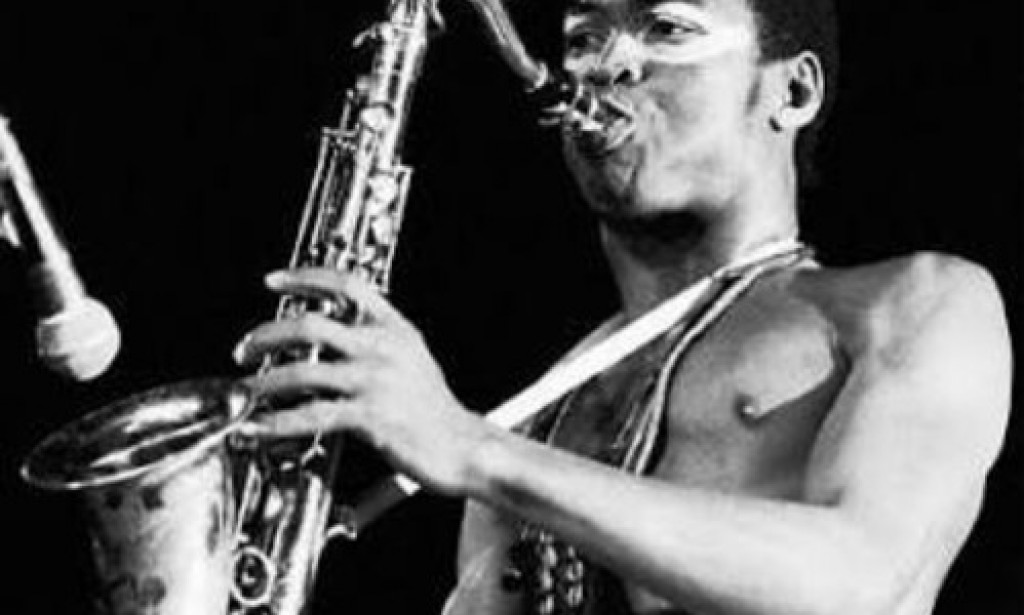
Our infamous 59th Macabre Dance
By
Tunji Ajayi
I love Fyodor Milkhallovich Dostoevsky. Though his name seems tongue-twisting, but his words are always witty. Hear the 17th century Russian novelist: “The cleverest of all, in my opinion, is the man who calls himself a fool at least once in a month.” The novelist seems to appreciate the pristine significance of self-assessment. Management scholars call it appraisal system especially for the sake of merit rating. An English writer seems to have lent credence to Fydor’s witticism. But he was more pungent, perhaps acerbic. His name was Charles Caleb Colton. Hear him:”The follies of the fool are known to the world, but are hidden from himself; whereas the follies of the wise are known to himself, but hidden from the world.” Thus, Colton believes that a wise person should be perceptive to notice and know his own follies early enough to avoid exposure to other people. But if he ignores his own follies, soon they will be revealed to the outsiders and risk being mocked. That explains the essence of honest and unbiased self-appraisal by a perceptive mind. Nine years after this writer wrote under almost similar caption in The Guardian Newspaper dated July 4, 2010 precisely at the heels of the celebration of Nigeria’s 50th Independent Anniversary, Nigeria’s situation is still like the movement of a proverbial double-headed snake; the summation of whose forward and backward movement will always be zero.
Writers’ most precious tools are words. Apt and concise words. In electing appropriate words to employ, writers are often stuck in the web of legalese and lexical conundrum. I pity journalists’ wives. I often feel they missed road like the music maestro, Fela Anikulapo Kuti would sing in one of his mid 70’s album – “Shallow River.” While other professionals are clung for nocturnal activities, journalists are endlessly brainstorming in the night about societal problems, finding appropriate lexicon to describe events and garnish their stories, features, press releases etc. They are free from heart palpitation only when their stories meet deadlines; and are more relaxed when their papers are put to bed, even than when their pregnant wives are successfully put to bed. Perhaps journalists’ wives deserve loneliness allowance.
For a long time, I have brainstormed on the appropriate usage of the word “rebel” which is often used with negative connotation. But whatever meaning we appropriate to the hated and nebulous word, I honestly think every country needs many rebels with free lips to constantly pull the nations ears before they move dangerously to the brink of precipice and subsequent fall. Rulers need to be constantly alerted in order that the nation they govern may grow and their people may survive. Like James Morton the great artist would say, free minds and free lips are necessary in order that men may grow and learn. Any society without her pantheons of rebels may never grow. Nelson Mandela was a dreaded rebel to the erstwhile South African white minority rulership, while fighting ferociously against apartheid and white dominance in South Africa for many years until the black totally secured their freedom in 1994. So was Martin Luther King Jr. who fought for civil rights in America in the 60s. Marcus Garvey was a rebel advocating for black economic independence with his African Communities League in the early 20th century.
Nigeria has her own rebels too who fought relentlessly for social justice in Nigeria till death - Fela Anikulapo Kuti, Gani Fawehinmi, Adaka Boro, Ken Saro-Wiwa, Beko Ransomi Kuti, Bala Usman, Chief Obafemi Awolowo, et.al. Having being psychologically troubled about the continued stagnation in the underdeveloped black nations in spite of the efforts of their freedom fighters, the reggae singer Eric Donaldson, once lamented: “Must all these great heroes die in vain, while we go straight into slavery once again?” Rebels are agents of national development, the nations’ conscience; the eyes and ears of the silent masses. Except for the singular efforts of her rebels, Nigerians are generally renowned for their complacent nature. And this has been taken for granted by successive governments. This was duly observed by Fela in his album - STB, Sorrow Tears & Blood. Fela bemoaned the complacent nature and culture of silence of the Nigerians. He quipped: “My people sef dey fear too much, they fear for the thing we no see, they fear for the air around us. We always get reason to fear. We no wan die, I get one house, I get one child, Papa de for house, mama de for house. I wan enjoy. So policeman go slap your face you no go talk. Army man go whip your yansh you go de look like donkey. . .“ While people’s silent nature should have been taken for patience and their expectation for better governance, Nigerian leaders have mistaken their culture of silence to mean idiocy and indifference. Hence they revel in lethargy and sink into moral debauchery on daily basis.
Unless you snuff life out of him, an average Nigerian will go on bearing every suffocating situation. For example, if today the government bans the use of cooking gas, be assured Nigerians would provide their own alternative solution even if the government fails to do so. They would turn to kerosene. If kerosene is not supplied they would use charcoal to cook. Let the government ban the use of charcoal, Nigerians would find a leeway. They would send their wives and children to the saw-mills to look for sawdust to cook. Be assured the Nigerian saw-miller too would capitalize on his fellow Nigerians woes to hike the price of his saw-dust! Nigerians are sure to find another solution. In that suffocating condition, they would chant All is Well and throng into the bush with their children, looking for firewood. Should the government ban the cutting of fire-wood “to avoid deforestation”, they would remember their old pack of newspapers, unused journals and books to cook their foods. If those are exhausted, be assured that Nigerians have another solution. Yes. They would remember their old agbada flowing gown) and their wives gele (head gear) and buba to cook! Were there Nigerians during the Bible time, the Israelite of old would have had a lot to learn from them about the culture of silence, rather than murmuring against Uncle Moses in the wilderness merely because of want of bread and water for a few days. Haaa! Nigerians’ capacity to endure asphyxiating and life-snuffing situations is legendary. They are perhaps the most resolute and resilient men on the earth planet. Ironically, that is also their albatross where silence is often mistaken for complacency, indifference and outright idiocy by the rulers.
One of our own renowned rebels in 1981 once bemoaned the absence of effective governance then. The legendary musician Fela Anikulapo Kuti, saw Nigeria’s position then as an interregnum: He sang piquantly in his Original Sufferhead. Hear him: “Water for town? He no dey. Light nko. He no dey. Government sef he dey? He no dey. Looku right and left he no dey. I no see dem there . . . ” According to the acerbic lyrical content of Fela’s song, the government as at 1980 was promising that in 1990 potable water would be available for all Nigerians with the aid of the United Nations programmes. Fela’s lyrics showed that it would be a daunting task for Nigerians to wait patiently for a period of 10 years; viz from 1980 till 1990 to get potable water to drink and electricity to use. Nigerians waited in pain and anguish with baited breath.
But even then, the promised 1990 year came and went by; yet the government could neither provide water nor electricity for the people. Until Fela, the perspicacious musician died in 1997, Nigeria’s suffocating conditions, and all he had decried in his songs for many years remained the same. Indeed by 2010 – twenty-eight years after Fela sang his song, Nigeria still relied on questionable sources of water to drink, while our health institutions could merely engage in media sloganeering daily in a bid to discourage the use of unhealthy water to prevent health breakdown and pandemic diseases. Here we are again in the year 2019 celebrating 59th Independence. Politicians are yearning for 2023 to reel out more promises.
Nigeria, a stupendously oil-rich nation earning billions of dollars revenue from oil products monthly is yet to have constant electricity supply in 2019. While the industrial sector writhe in pain for lack of social infrastructure and energy to power their plants, youths and graduate unemployment has risen to unimaginable proportion. Yet we do not want social vices, like kidnapping, ritual killings, armed robbery, vandalism and brigandage to thrive.
The transportation sector are barely surviving as over 70% of Nigeria’s federal roads across the nation are in deplorable state and have become death traps where many lives are being lost daily. Yet our Vehicle Inspection Officers (V.I.O. and Federal Road Safety Corps (FRSC) are requesting for Certificates of Road Worthiness of our vehicles, on unworthy roads! The oil rich nation cannot refine her oil locally but still relies on foreign import of fuel which the government claims is being subsidized at too huge cost. Yet, obvious solutions are ignored. Indeed, now erstwhile Governor of the Central Bank of Nigeria. Alhaji Lamido Sanusi, who saw it all at his vantage position once confessed, while still in office that a cabal made up of the political office holders, who were saddled with the responsibilities of assuaging the masses’ socio-economic problems were among the biggest beneficiaries of fuel subsidy in the country and therefore could only call for the subsidy removal. Neither the billion dollar national revenue from oil in the last 59 years nor the huge foreign and domestic loans being taken has any known impact on the socio-economic lives of the Nigerian people. According to Sanusi, “if you are borrowing to finance corruption and leakages, there is a problem.” He couldn’t have been wrong.
Few years back under the erstwhile President Olusegun Obasanjo administration, Nigeria enjoyed so much debt relief/cancellation from her creditors at the IMF and Paris Club, making her almost a debt-free nation. But by 2010 her foreign debt profile had risen again to $4.3 billion, while her domestic debt had become $3.4 trillion. Little by little it soared to unmanageable level again. According to the then Speaker of the House of Representatives, Hon. Dimeji Bankole while speaking far back in 2010 with the Ad-hoc Committee on investigation into Local & Foreign Loan obtained by the Federal and State Governments, he said that “we are not on any mission to decree against borrowing, whether foreign and domestic, but we are persuaded that borrowing, where inevitable, should be functional, productive, backed by value and in optimal cases self-liquidating.”
Such statement appeared then, even till today, unsavory as it seems to justify borrowing. If a nation is so much endowed with resources that are yielding so high revenues, is it really compulsory that it should borrow? A lender is a master to a borrower. And the bible confirms that a borrower is a slave to his lender. Any government that perpetually puts a nation and her people into slavery through borrowing may not be worthy of any respect. Independence should be absolute and total. A wealthy nation that revels in borrowing all the time cannot lay claims to be an independent nation, because a debtor remains a slave to the lender, so says the bible. If a nation which is richly blessed like Nigeria still remains a borrower nation at 59, with a vast majority of her people unsure of their daily bread; that nation has no independent anniversary to celebrate. Nigeria’s debt profile was said to have risen to $81.27 billion in the first quarter of 2019. A debtor nation is hardly wholly an independent nation.
A profligate nation will forever remain a debtor nation. Let our present and past leaders all bow down their heads and keep mute from 12.00 midnight of October 1, 2019 for twenty-four hours, while they reflect on their past and show remorse for their respective ignoble roles played in moving Nigeria to her present stagnation, social, political and economic quagmire. Afterall the wise King Solomon admonishes all rulers in Ecclesiastes 72-4 “Better is it to go to the house of mourning than to go to the banquet house, because that is the end of all mankind; and the one alive should take it to his heart . . . . The heart of the wise ones is in the house of mourning, but the heart of the stupid ones is in the house of rejoicing.” It is God that has spoken. And like the wise men often say, Verbum Satis Sapienti.
-------------------------------------------
*Tunji Ajayi, a communication scholar, writer and biographer writes from Lagos, Nigeria

This is great, lovely
You must be logged in to post a comment.