

Rizal: The First Cosmopolitan Hero
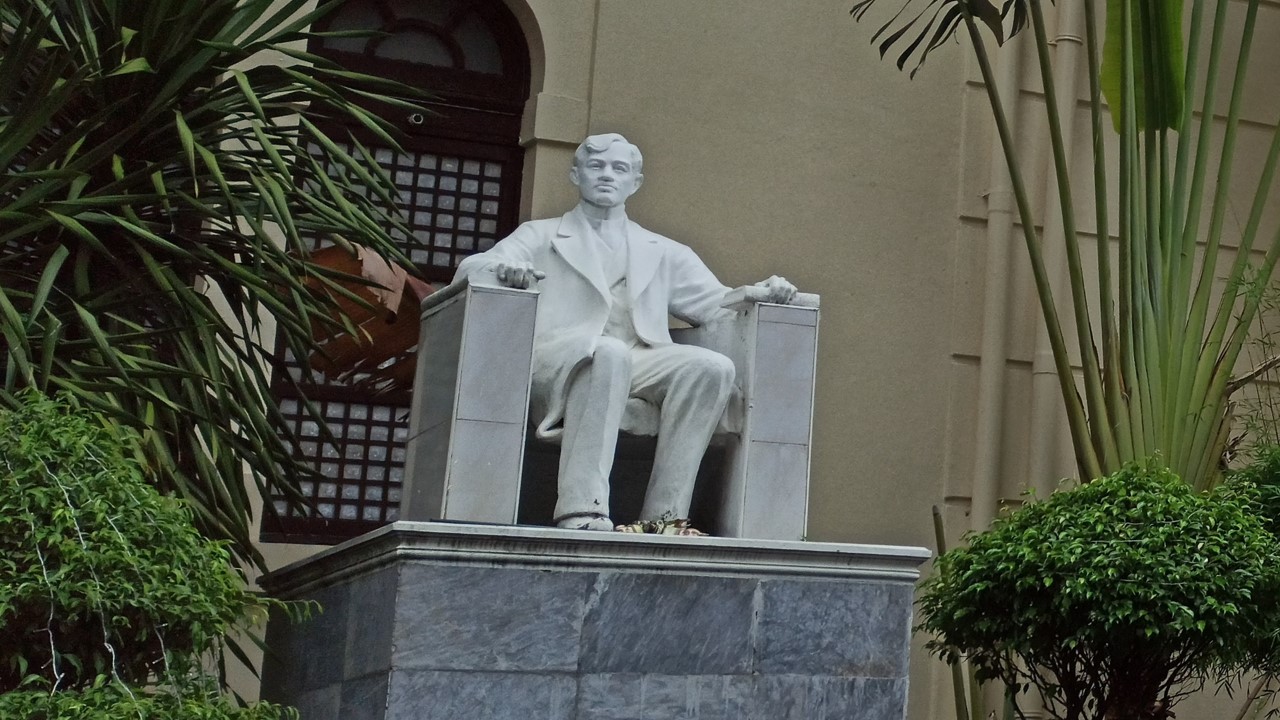 By: Ramlaurenz N. Sanchez
There has been several cases in history where people have been exiled, banished. In fact this has long been the means of punishment for many kings and royalties or those whose crimes were against the reigning monarchs in history. BUT not Rizal, he was neither king nor royalty, neither were the charges against him true according to him, nonetheless the Spanish authorities did not believe him. This is where I will begin this article. When Rizal was exiled in Dapitan in 1892, in which time, he creates a relief map of the whole Mindanao which, today still exists in front of the Dapitan Church Plaza. He also worked on the building of the waterworks of Dapitan (Tiamson et. al., 2001). Rizal was also an Educator, during his stay in Dapitan, he built not only a dam but at the same time he built a school and dedicated a part of his time as a teacher, this he described in a letter to his friend, Ferdinand Blumentritt (Palafox Jr., 2014). His good education led to him being one of the literary writers in his time with poems like A La Juventud Filipina, Mi Ultimo Adios and Hymn to Talisay. The latter he wrote for his students to sing under the Talisay tree. What I admire most about Rizal is simple, he spent much of his time in exile helping people solve their everyday problems.
Rizal was not just an excellent architect but a writer as well, authoring works like Noli Me Tangere (Touch Me Not/ Social Cancer) and El Filibusterismo (The Subversive) or Locsin’s alternative title the Reign of Greed. Both novels aimed at describing the society where he lived, criticizing to the least the abuses of the Catholic Church and the Spanish government in the Philippines. Rizal inspired his nation with words “There are no tyrants where there are no slaves.” He can thus be construed as urging his countrymen to overcome fear and emancipate themselves (Carvajal, 2014). While today’s historian battles for who should be given the title National Hero, Rizal or Bonifacio, the Noli and El Fili united them both. In July 3, 1892, Andres Bonifacio joined Jose Rizal’s, La Liga Filipina, when Rizal was exiled into Dapitan, Bonifacio revived the organization and took over the recruitment of members. As members of the now Bonifacio led La Liga Filipina clamoured for more armed revolution, the organization split into two: the ‘Cuerpo de Compromisarios’ which preferred peaceful reforms and the Kataastaasang Kagalanggalangang Katipunan ng mga Anak ng Bayan or the Katipunan led by Bonifacio as Supremo.(Mañebog, 2013). With this I agree to what the Center for Philippine Studies in Hawaii said, Jose Rizal sparked the 1896 Philippine Revolution with his martyrdom, bringing about the Filipino-Spanish War and the birth of a nation (CPS-Hawaii 2010).
Rizal’s impact to today’s world cannot be measured; in so many cases his works has influenced so many events in different parts of the globe. In December 27, 1952, the American Congress made a historic decision, after Rizal’s Mi Ultimo Adios was recited before American Lawmakers, this decision led to the passing of the Philippine Organic Act of 1902 (Pacis, 1952). This Act was the first step towards an independent Philippines. On the other hand during the unveiling of Hungarian Ambassador and poet Jossef Bencze’s Hungarian translation of Mi Ultimo Adios, the 36th and latest translation Novelist F. Sionil Jose, said “No country in the world has produced someone like him.” referring to Jose Rizal. (Mercene 2018). This recognizes the unique contribution of Rizal even today, a century after his death not only to the Philippines but to the world. During World War II in Indonesia, Rosihan Anwar’s reading of Rizal’s Mi Ultimo Adios and its broadsheet printing in Asia Raya, furthered nationalist sentiments among Indonesian youths. In this translation however, in the words of John Nery, Rizal was “reimagined as a ghostly general urging his troops on, a warrior with a battle cry on his lips “Forward, Lunge, Attack!” (Nery 2011). This perhaps is the most ironic twist of all Rizal, who never wanted war, nor yearned for violence became the poster boy for the war and his last farewell, the call for arms that led to the independence of Indonesia.
Anwar Ibrahim in one of his lectures in UP Diliman called Rizal as the “First Cosmopolitan Hero.” According to him Rizal is beyond the Philippines (Nery 2010). Rizal has indeed touched the hearts of generations past and present, he has influenced leaders of many nations and thus their admiration has led to making Rizal one of the few people honoured and celebrated in different nations, his monuments in different countries a testament to his impact in the world’s history. Rizal indeed is unique. He was the man who waged war with the use of his pen, refused to be rescued by the men of Andres Bonifacio and allowed himself to die in the hands of his captors, only to be reborn in the hearts of freedom fighters through the ages. The man who decided to make a lifestyle of giving his life and works for the sake of his countrymen, would be honoured by nations beyond his own. Yes, Rizal IS Beyond the Philippines.
References:
· Carvajal, Orlando, 2014 May, Tyrants, https://www.pressreader.com/philippines/sunstar-davao/20140504/281715497627270
· Center for Philippine Studies - University of Hawaii, 2010, Dr. Jose P. Rizal, http://www.hawaii.edu/cps/rizal.html
· Mañebog, Jensen DG., 2013 September, The Collaboration between Jose Rizal and Andres Bonifacio, https://ourhappyschool.com/ap-social-studies/collaboration-between-jose-rizal-and-andres-bonifacio
· Mercene, Floro, 2018 January, Mi Ultimo Adios 36th translation in Hungarian, https://news.mb.com.ph/2018/01/07/mi-ultimo-adios-36th-translation-in-hungarian/
· Pacis, Vicente A., 1952 December, Rizal in the American Congress, https://philippinesfreepress.wordpress.com/1952/12/27/rizal-in-the-american-congress-december-27-1952/
· Tiamson et. al., 2001, Rizal: buhay at ideolohiya, https://books.google.com.ph/books?id=6YOyVUc67DYC&lpg=PA194&dq=rizal%20sa%20dapitan&pg=PA207#v=onepage&q=rizal%20sa%20dapitan&f=false
· Palafox, Felino Jr., A., 2014 June, The architect, planner, and engineer in Dr. Jose Rizal, https://www.manilatimes.net/the-architect-planner-and-engineer-in-dr-jose-rizal/105171/

You must be logged in to post a comment.