
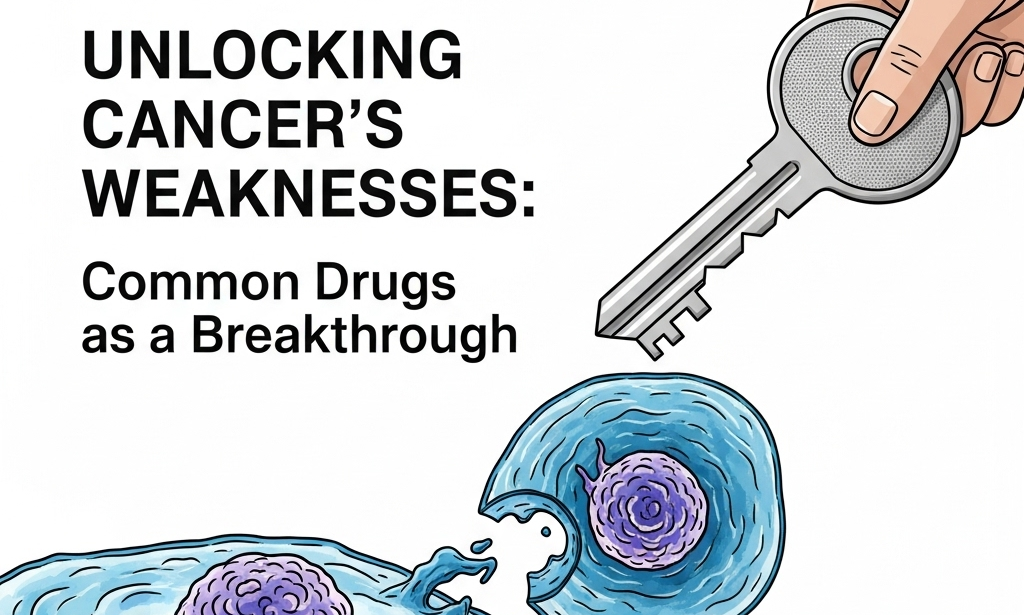
A groundbreaking discussion featuring Dr. John Campbell and Dr. Maus is shedding light on a revolutionary approach to cancer treatment: the strategic repurposing of existing drugs. These are medications, often decades old and remarkably inexpensive, originally developed for other conditions but now showing extraordinary promise in the fight against cancer, boasting well-established safety profiles.
Ivermectin: More Than Just an Antiparasitic?
Dr. Maus's journey into repurposed drugs began during his research into early COVID-19 treatments, specifically Ivermectin [01:40]. What he uncovered was astonishing: over 300 peer-reviewed papers detailing Ivermectin's anti-cancer properties [03:21]. While this extensive research is primarily preclinical, conducted in cell lines and animal models, its implications are profound [03:55].
Ivermectin appears to be a broad-spectrum anti-cancer agent, demonstrating efficacy against a diverse range of cancers, from blood cancers to solid tumors [04:16]. Its mechanisms of action are remarkably multifaceted:
-
Targeting Cancer Stem Cells: Ivermectin shows potential in attacking cancer stem cells, which are notorious for driving metastasis and recurrence and often resist standard chemotherapy [04:39].
-
Reversing Multi-Drug Resistance: It can re-sensitize stubborn cancer cells to chemotherapy, making conventional treatments more effective [06:15].
-
Radio-sensitizer: It has the ability to make cancer cells more vulnerable to radiation therapy [06:24].
-
Inhibiting Angiogenesis: Ivermectin can disrupt the formation of new blood vessels that tumors need to grow and thrive [06:31].
-
Blocking Metastasis: It works by inhibiting enzymes that facilitate the spread of cancer cells throughout the body [06:38].
Despite this compelling preclinical evidence, the lack of large-scale human trials remains a significant hurdle [07:11]. The likely reason? Ivermectin is off-patent and inexpensive, offering little financial incentive for the extensive research required for FDA approval in oncology.
Fenbendazole and Mebendazole: The Unsung Heroes of Antiparasitics?
Beyond Ivermectin, another class of antiparasitic drugs, benzimidazoles (including Fenbendazole and Mebendazole), has emerged with surprising anti-cancer potential [08:13].
-
Fenbendazole: This compound gained widespread attention through the remarkable story of Joe Tippens, who reportedly achieved remission from terminal small cell lung cancer using this common dog dewormer [08:20]. Further validating this anecdotal evidence, Stanford University Medical Center later published case reports of three patients who experienced remission from stage 4 cancer after failing conventional treatments, all with the help of Fenbendazole [10:18].
-
Mebendazole: An FDA-approved human version of Fenbendazole, Mebendazole boasts an excellent safety profile [11:21]. It is currently being investigated in approximately a dozen clinical trials for various cancers, including colon, prostate, and even pediatric brain cancers [11:45]. One of its most intriguing mechanisms involves blocking glucose transporters on cancer cells, effectively starving them of their energy source [12:19].
Real-World Experience and Dosing Insights
Dr. Maus shared his extensive experience guiding cancer patients in the use of these repurposed drugs, often witnessing remarkable outcomes [18:45]. He emphasized the synergistic potential of these drugs when combined with conventional treatments like chemotherapy and radiation [19:54].
For those considering these approaches, Dr. Maus provided valuable insights into typical dosing:
-
Ivermectin: A starting dose of 1 mg/kg/day is often suggested for intermediate to high-grade cancers [25:55], while a lower dose of 0.5 mg/kg/day may be used for low-grade cancers (e.g., CLL, multiple myeloma) or inflammatory conditions [26:23], [32:06]. An initial duration of 3 months is suggested, followed by reassessment [27:01]. Transient visual symptoms (vivid colors, "stars") can occur initially but typically resolve [32:47]. Higher doses (2 mg/kg/day) require increased caution, especially in elderly patients [33:57]. The best results are often observed when Ivermectin is combined with chemotherapy [28:53], and it may even help reduce chemotherapy side effects [31:12].
-
Fenbendazole/Mebendazole: A typical dose is 1000 mg/day, split into two doses, taken six days on and one day off [44:36], [45:15]. For low-grade or early-stage cancers, a lower dose of 500 mg/day may be considered [45:32]. Similar to Ivermectin, an initial 3-month protocol with reassessment is suggested [46:01]. Rare side effects include transient elevation of liver enzymes, which normalize upon stopping or reducing the drug [43:04]. Mebendazole is often preferred for brain tumors due to its superior penetration of the blood-brain barrier, and for certain cancers like ovarian, squamous cell carcinomas, breast cancers, and sarcomas, based on preclinical research [49:23], [50:16]
Navigating Challenges and Glimpsing the Future
A significant hurdle for these repurposed drugs is the resistance from mainstream oncology, often constrained by rigid guidelines and the absence of financial incentives for research [23:53]. Consequently, patients frequently hesitate to disclose their use of these drugs to their oncologists, fearing negative reactions or even the discontinuation of conventional treatment [36:47]. This lack of open communication unfortunately impedes vital data collection and understanding [37:05].
Despite these challenges, a sense of optimism is growing. Information is spreading through alternative channels, and there is hope that with evolving medical paradigms and a renewed focus on patient benefit over corporate interests, research into repurposed drugs will gain momentum and eventually integrate into mainstream cancer care [51:46]. The importance of supportive measures, such as maintaining adequate Vitamin D levels, was also highlighted as a crucial component of overall health and treatment [54:18].
This compelling conversation underscores the urgent need for open-mindedness, scientific curiosity, and patient-centered approaches within oncology. Exploring all potential avenues, particularly those that are safe, affordable, and supported by strong scientific rationale, could truly revolutionize how we approach cancer treatment.

You must be logged in to post a comment.